
INFLUENCE OF ANIME IN POP CULTURE
Written By: Kathy & Emma


BOOTH
BOOTH. https://booth.pm/en. Accessed April 6, 2022.
BOOTH is an e-commerce platform that allows independent or freelance artists specializing in anime-style or computer graphics illustration to sell art related products, physical or digital. Physical products include illustration books, badges, tote bags, and keychains, while digital products include pdf files of digital painting tutorials, brush files, and 3D models. This platform is especially useful for those looking to support skilled artists involved in the anime community. The website is available in Japanese, English, and Chinese. BOOTH is designed for shoppers who assess products visually, supported by a clean interface and large product icons. Users can also filter products according to product category, and even anime culture related events like OSAKA FES or HARU COMIC CITY 30. However, the site is not accustomed to mediating communication between consumers and creators, as the only way to do so would be to reach an artist page by first searching a product that they sell. BOOTH allows fans to sell both original creations and fanworks. This site can help users understand not only how anime art-styles have informed how artists are approaching art and painting differently from a pop culture perspective, but also how fans who happen to be artists are commodifying their enthusiasm and participating in anime fan culture by imagining alternate scenarios for their beloved characters. Users can browse through products easily by category and recommended merchandise all through the home page. As BOOTH is an e-commerce space, there will always be new products to reflect the development of anime culture and its influences. Users can surely find the products informative and the site itself intuitive. BOOTH is very easy to access, as its popularity stems off the largely popular site, pixiv, where anime-inspired artists share their works.
(Kathy)
ANIME AESTHETICS IN OTHER MEDIA OVERSEAS

SPIRIT BLOSSOM 2020 | OFFICIAL EVENT TRAILER - LEAGUE OF LEGENDS
“Spirit Blossom 2020 | Official Event Trailer - League of Legends.” YouTube, uploaded by League of Legends, 22 July 2020, https://www.youtube.com/watch?v=b-I6A5aG2uc.
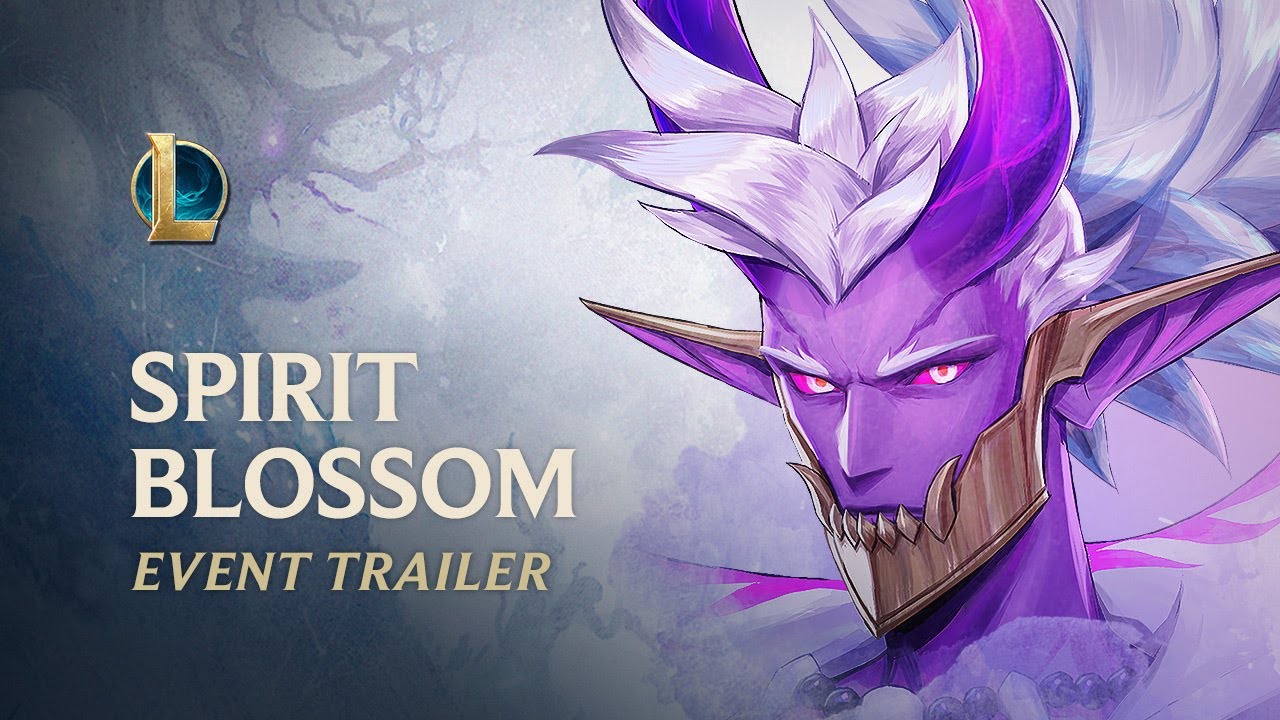
This video features an in-game event for world-wide popular MOBA game League of Legends from Riot Games. Named “Spirit Blossom 2020”, the event celebrated the first release of brand-new Spirit Blossom in-game cosmetics skin line for already existing characters and two new characters. Another trailer titled “Spirit Blossom 2020: Part 2” followed about a month later with five more skins. The trailer assumes that its viewer already plays League of Legends regularly enough to understand who the characters are and what Riot Games is introducing: skins that don’t really affect gameplay. By watching the video, viewers can see that the aesthetics and game lore in this event feature anime style art in 2D with clear inspiration from Japanese fantasy aesthetics like sakura blossoms, magic, and clothing – a first for a game mostly in 3D models with splash art that did its best to achieve realism typical of concept art of games and movies. The event and the video clearly demonstrated that League of Legends, a Western game, has fully recognized the merits of anime and its popularity, and wanted to profit from anime’s role in pop culture by implementing similar elements in the game. The levelling system from 1:18 to 1:24 briefly shows rising relationship levels, which players can achieve by talking to characters after each round. This is reminiscent of the widely popular dating simulators persistent in anime gaming culture in which players can romance characters in the game by repeatedly interacting with them and gaining ‘hearts’ to become intimate with them. Spirit Blossom 2020 demonstrates the influence of Japanese anime culture on mainstream Western culture that often doesn’t include anime in its midst – clearly, Riot Games is showing that this is changing. This trailer was produced directly by Riot Games, who makes and continues to update League of Legends. Only two minutes long, the teaser is quick to watch and easy to access through YouTube.
(Kathy)
Ghost in the Shell: SAC_2045
Ghost in the Shell: SAC_2045 is an anime that was produced by a Japanese studio but licensed by Netflix, making it a Netflix original anime. Netflix is an American subscription streaming service and production company that has taken the world by storm, establishing itself as the most used streaming service on the internet. Because of the large viewership, any series that becomes popular on Netflix often becomes a well known topic in pop culture. Over the years Netflix has recognised how much viewership anime and a genre can bring, and has acquired the streaming rights for various popular anime franchises such as the Studio Ghibli Library, which includes some of the most popular Japanese animated films to date (Gramuglia 2021). Ghost in the Shell: SAC_2045 is an anime series based on the 1980s manga Ghost in the Shell, and has had various other anime interpretations prior. This Netflix series in particular received a lot of backlash for the lacklustre animation and low quality CG effects. Some other anime series’ that are “Netflix Originals” have also received similar negative feedback, criticising the quality of the animation of various shows licensed by Netflix. Ghost in the Shell: SAC_2045 is an example of how Netflix as a driving force in pop culture recognises the demand for anime, but falls short in delivering desirable results.
(Emma)
Gramuglia, Anthony. “How Netflix's Anime Library Has Grown since Its First Original 7 Years Ago.” CBR, 12 Aug. 2021, https://www.cbr.com/netflix-anime-growth-since-knights-of-sidonia/#:~:text=Netflix%20has%20streamed%20anime%20on,first%20Netflix%20%22Original%22%20Anime.
"Ghost in the Shell: SAC_2045 | Final Trailer | Netflix." Youtube, Uploaded by Netflix, 20 Mar 2020. https://www.youtube.com/watch?v=gVklNfuSdNg


ANIME: FROM CULT FOLLOWING TO POP CULTURE PHENOMENON
This paper examines the influence of Japanese anime on Americans and American culture as well as the practice of fansubbing. Chambers recalls the history of anime and legal repercussions of engaging in fansubbing as well split opinions on official translations. Nevertheless, Japanese anime reinforces Japan’s soft power and economic prowess in the minds of many Americans despite anime’s strange foreign elements. Since Chambers conducted their study in 2012, the paper observes and reveals an interesting transition beginning to take place – that anime is becoming more accepted despite negative stereotypes. Chamber’s paper provides an adequate review of the historical influence of Japanese anime in America and its stigma that animation was purely a children’s medium, stymying Japanese anime’s sway on wider American pop culture targeting more mature audiences. The paper describes a time of the past and her contemporary that finds anime a subculture rather than a main factor in popular culture, but also notes its potential to break into the mainstream. While the paper is from Elon University, the journal in question is from an undergraduate journal whose standards would be more lax than standard scholarly journals. Nevertheless, the study conducted provides some valuable insight even if there is potential for expanded research affirming Chamber’s findings. This paper can be accessed for free, easily searchable through Google.
(Kathy)
Chambers, Samantha Nicole Inëz. "Anime: From Cult Following to Pop Culture Phenomenon." The Elon Journal of Undergraduate Research in Communications, vol. 3, no. 2, 2012, pp. 94-101. https://www.elon.edu/u/academics/communications/journal/wp-content/uploads/sites/153/2017/06/08ChambersEJFall12.pdf


MINICOMI - ANNUAL ANIME ART MARKET
MiniComi Art Market, 2022, https://minicomivancouver.org/.
MiniComi is a fan organised event that provides a space for independent artists and small business owners to sell fan made anime related art and merchandise. This site is the main website used to distribute information about the annual event, including admission requirements, vendors, location etc.
The MiniComi website is a result of a community that was motivated to host an art market event dedicated to anime culture. This is indicative of how anime as a form of media can impact and inspire creation within a community. On one level it evidently can prompt the development of non-profit organisations to host events surrounding anime, such as this art market. On another level the existence of an art market shows how anime has a significant enough impact on its fans to inspire many artists to create whole businesses based off of selling fan made merchandise. The site itself has a simple configuration with 1 page under each sub topic. One to note is the “Media” page, which provides visual information about the environment at these annual events as well as the products and artwork that result from the consumption of anime. This site is also accessible through MiniComi’s social media channels, so there are multiple ways to access the information available about this annual art market event.
(Emma)
REALITY: Broadcast your virtual beings from everywhere
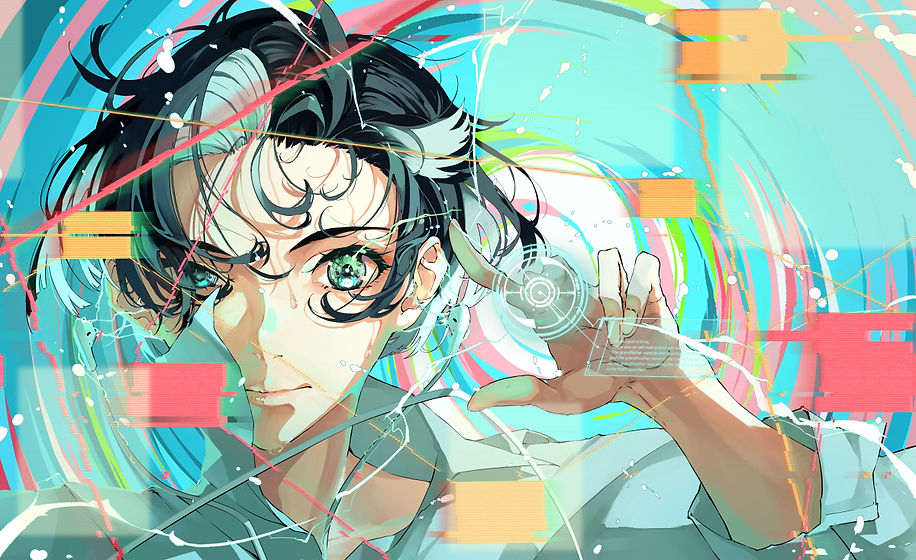
Akihiko Shirai’s conference proceeding provides readers a brief history of notable virtual beings that have inspired the new streaming trend of VTubers, which builds on the practice of streaming an entertainer's activities online through a video platform like Twitch. Shirai’s proceedings are short and easy to read, while also briefly mentioning key platforms and technology involved in Vtubing. However, this paper assumes that readers are already somewhat familiar with VTubing and REALITY, a free avatar live-streaming app downloadable on smartphones. Because the proceeding was written and presented in 2019, VTubing has actually already evolved beyond just REALITY, and VTubing is much more common. There are also many more VTuber virtual streaming apps available that are potentially more intuitive and influential compared to REALITY. However, certain observations such as VTubers becoming more and more of a radio platform remains true today. Scholarship on VTubing is quite rare, and so Shirai’s proceedings offer a history whilst other academics focus on specific issues that arise from Vtubing like image rights or censorship. VTubing is born from crossing streaming with anime aesthetics along with the desire for privacy as a potential internet celebrity. It is not unusual for viewers of Vtuber streams to be anime fans themselves. Shirai’s proceedings are easy to find with an institutional search engine like UBC summons and login credentials, but difficult to access otherwise since it is locked behind a paywall. The source is easy to navigate, as the proceeding is short and labelled throughout with clear headings.
(Kathy)
Shirai, Akihiko. “REALITY: broadcast your virtual beings from everywhere.” ACM SIGGRAPH 2019 Appy Hour, New York, NY, USA, 28 July 2019. DOI:https://doi.org/10.1145/3305365.3329727
